Introduction to Generative Engine Optimization
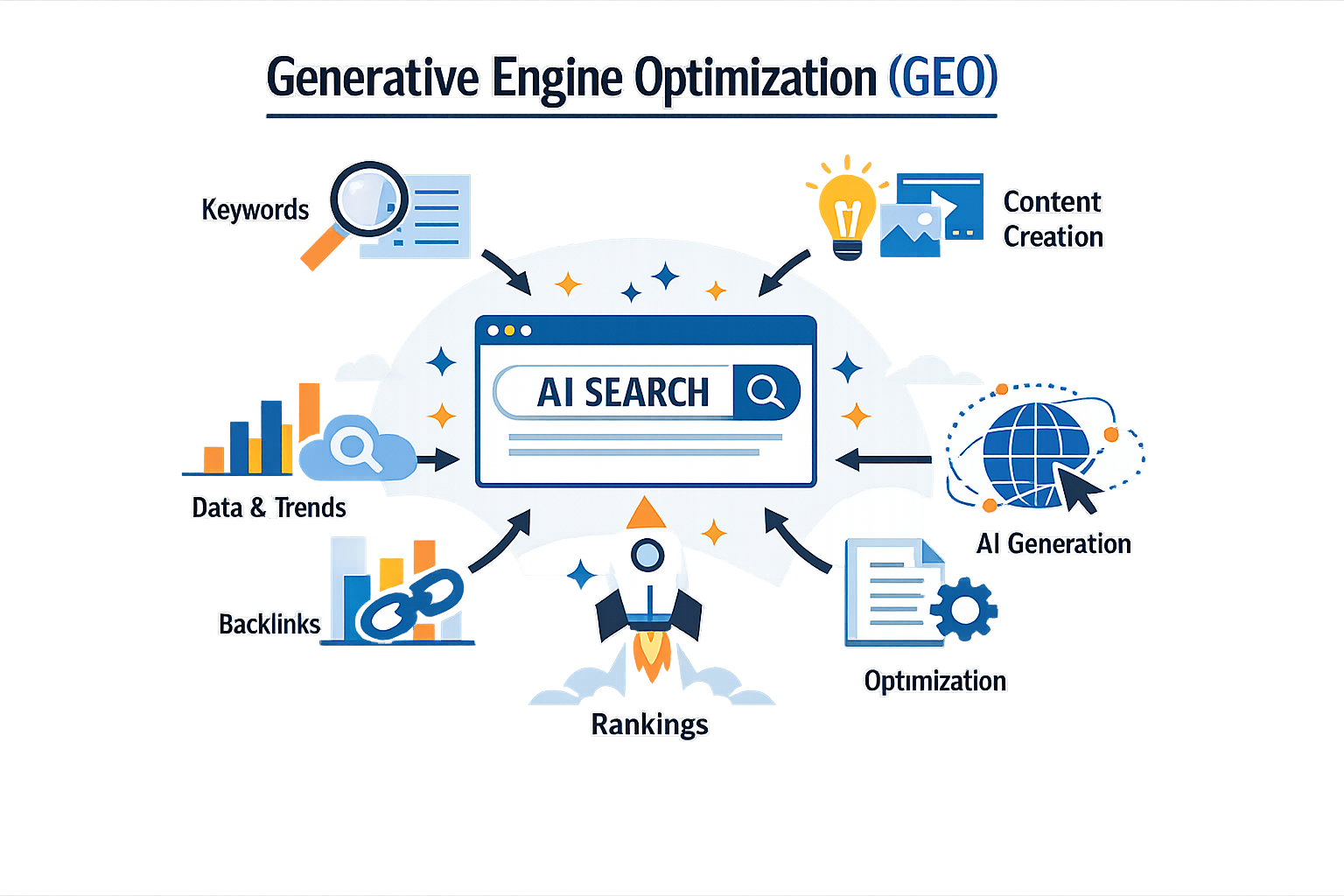
Generative engine optimization (GEO) is the practice of structuring content so AI-powered search platforms find, understand, and cite it. When someone asks ChatGPT or Perplexity a question, those systems pull from indexed sources to build an answer. GEO is the discipline of making your content the source they choose.
I started tracking this shift in 2023 when clients reported traffic declines that didn't correlate with traditional ranking drops. Queries were moving to conversational interfaces. The old playbook — title tags, backlinks, keyword density — still mattered for Google, but it didn't guarantee visibility in AI-generated responses. GEO fills that gap.
GEO is a set of editorial, technical, and governance practices that increase the probability a generative engine selects your brand as a source when building an answer. It's not about gaming the system. It's about clarity, structure, and machine-readable signals that help large language models understand what you're saying and why it's credible. For a broader view of how this fits into modern search strategy, see Answer Engine Optimization: The Ultimate Guide to Easy Wins.
Why GEO Matters Now
Traditional search sent users to a list of links. Generative engines send users an answer, sometimes with citations, sometimes without. If your content isn't structured for machine parsing, you're invisible in that answer even if you rank first in Google.
The shift is measurable. Queries that once drove click-through traffic now resolve inside the AI interface. Users get what they need without leaving the chat window. GEO ensures your brand appears in that window — as a cited source, a recommended next step, or a named authority.
This isn't speculative. Businesses that adopted GEO practices early saw citation rates climb in Perplexity and ChatGPT responses, even when their Google rankings stayed flat. The work is different, but the return is real: visibility where the queries are actually happening.
How GEO Differs from Traditional SEO
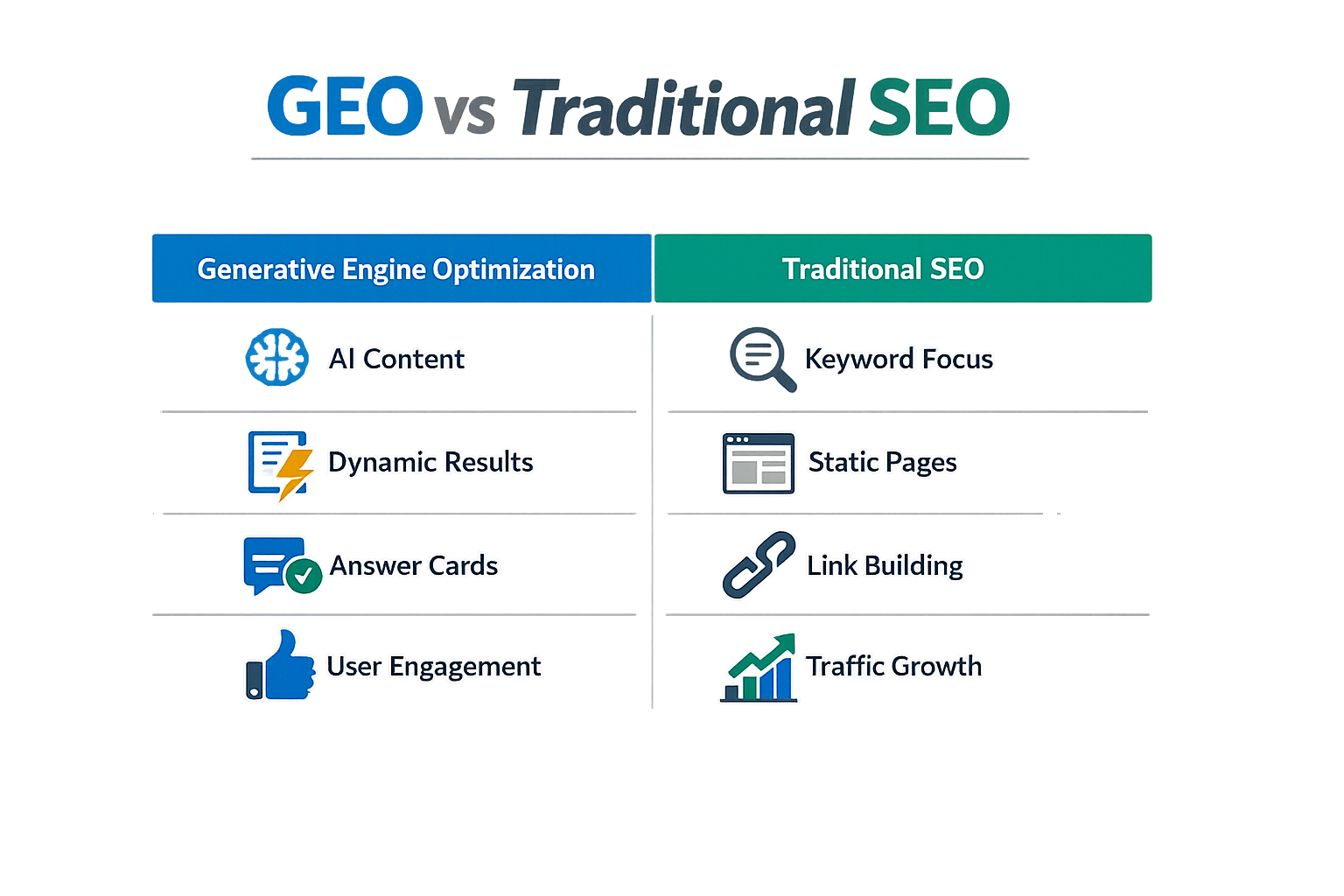
Traditional SEO optimizes for search engine algorithms. You write content, build links, and watch where you rank on the results page. GEO optimizes for AI retrieval relevance — whether your content gets pulled into the model's context window when it generates an answer.
The mechanics are different. SEO tracks click-through rates. GEO tracks reference rates — how often your content appears in AI-generated responses. You're not competing for position ten on page one. You're competing to be one of the handful of sources the model considers authoritative enough to cite.
What Changes in the Optimization Target
SEO focuses on ranking in search engine results pages. GEO focuses on the retrieval phase — which documents or fragments enter the model's context before it writes the answer. If your content doesn't make it into that retrieval set, you don't exist in the answer.
This shifts the entire optimization strategy. Traditional SEO rewards keyword density, backlink profiles, and technical site health. GEO rewards structured clarity, semantic completeness, and machine-readable context. The model needs to understand what your content says and trust that it's correct.
GEO is not a replacement for SEO — it complements it by focusing on inclusion and citation in AI-generated answers.
Metrics That Matter Now
Click-through rate doesn't tell you if an AI cited you. Reference rate does. You need to track where your content appears in generative responses, how often it's quoted, and whether the attribution is accurate.
Traditional search engines are losing volume to conversational interfaces. Users prefer direct answers over ten blue links. If your content isn't optimized for retrieval, you're invisible in that interaction — even if your SEO fundamentals are solid.
For a deeper look at how these strategies intersect, see our guide on answer engine optimization vs generative engine optimization.
| Dimension | Traditional SEO | Generative Engine Optimization |
|---|---|---|
| Target | Search engine algorithms | AI retrieval relevance |
| Primary metric | Click-through rate | Reference rate |
| Optimization focus | Ranking position | Context inclusion |
| User outcome | List of links | Direct synthesized answer |
Benefits of Implementing GEO
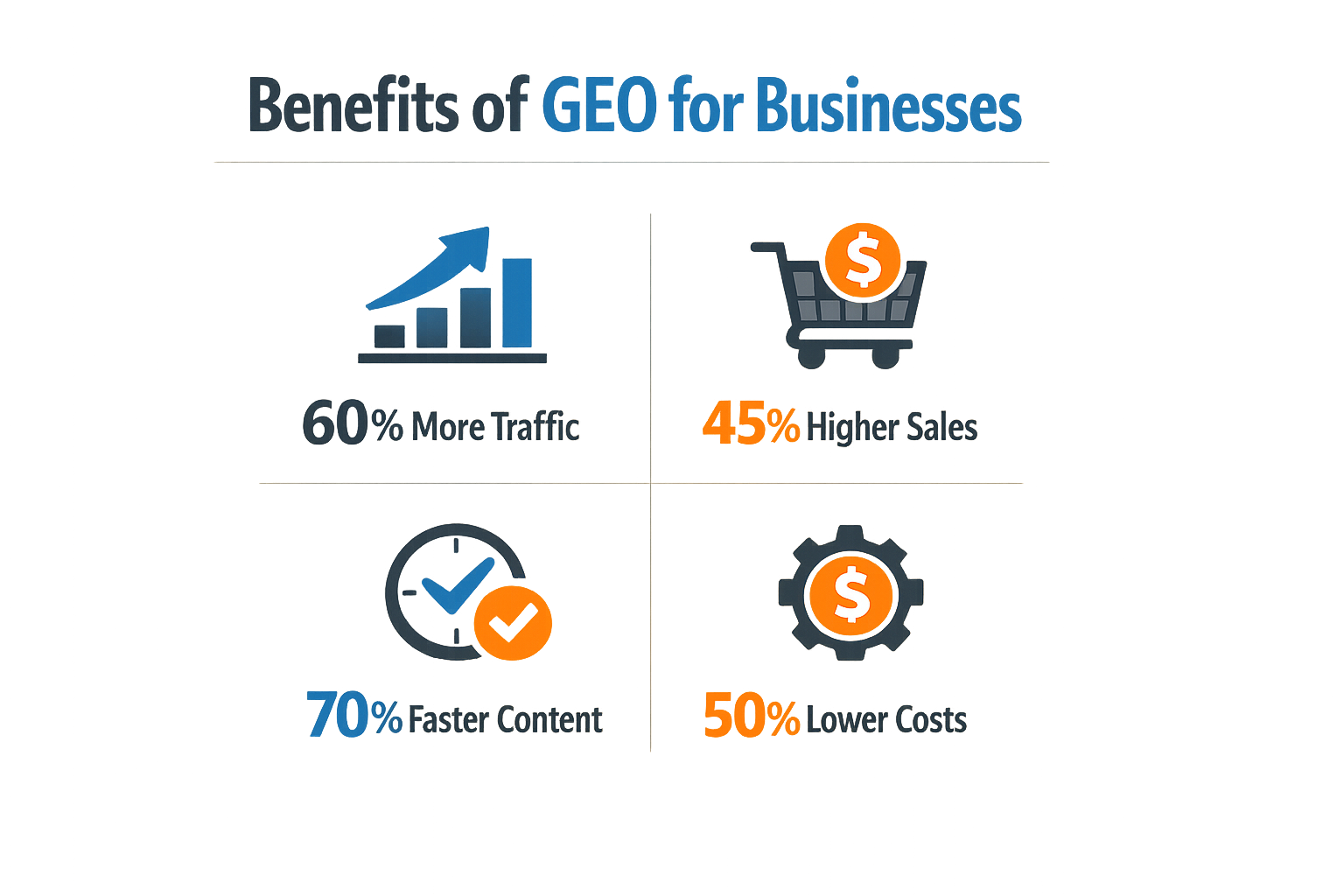
Generative engine optimization delivers concrete advantages for businesses that adopt it early. The shift from search-result pages to AI-generated answers changes where your audience finds you. Brands that surface in AI responses gain visibility; those that don't lose ground to competitors who do.
Visibility Where Your Audience Actually Looks
Consumers increasingly bypass traditional search engines and ask ChatGPT, Perplexity, or Claude directly. If your content doesn't feed those models, you're invisible to a growing segment of potential customers. GEO ensures your site serves as a clear, authoritative source for AI crawlers looking for specific facts to answer user prompts.
Those who ignore GEO will lose ground, as growing numbers of consumers turn from search engines to Generative Engines.
Structured Data as a Competitive Moat
Schema markup tells AI and search engines exactly what your content means. A product page with proper structured data — price, availability, reviews — is machine-readable in a way that untagged prose is not. This isn't optional anymore; it's foundational. Prioritize structured data as the first step in any GEO effort.
For a deeper look at building this into your workflow, see Building a GEO Strategy: Prioritizing Content for AI Answers.
Reduced Dependency on Click-Through
Traditional SEO chases clicks. GEO chases citations. When an AI model cites your site in an answer, you've delivered value even if the user never visits your page. Over time, repeated citations build brand recognition and authority. The economics are different — you're not optimizing for a single conversion funnel, you're optimizing for presence in the answer itself.
Faster Adaptation to Model Updates
Search algorithms change quarterly. LLM training datasets change on longer cycles, but when they do, the shift is abrupt. Content optimized for generative engines — clear facts, structured data, authoritative sourcing — adapts better to model updates than keyword-stuffed pages built for 2015 SEO.
Conclusion and Next Steps
Generative engine optimization is the practice of making your content visible and citable when AI systems answer questions. The shift is real: 73% of U.S. queries now encounter an AI summary, and when an AI Overview appears, traditional organic listings see a 34.5% drop in click-through rate. If you wait for the dust to settle, you're already behind.
The difference between GEO and traditional SEO is straightforward. Traditional SEO optimizes for blue links on a results page. GEO optimizes for citation inside the AI's synthesized answer. The AI performs the research automatically, pulling from its base knowledge and recent online sources. Your job is to make your content the source it picks.
Start with structure. Use schema markup, clear headings, and concise answers to common questions. Write for machines first, humans second — if the AI can parse it, people can read it. Track where you're cited, measure visibility in AI outputs, and iterate.
I've spent the last year building production AI software at Xenco Labs, and the pattern is consistent: the operators who ship structured, citation-ready content early see compounding returns. The ones who treat this as a fad wake up six months later wondering where their traffic went.
If you're ready to build a systematic approach, Building a GEO Strategy: Prioritizing Content for AI Answers walks through the prioritization framework we use internally. The next step is to inventory your content, identify high-value queries, and start shipping structured answers.
Learn what Generative Engine Optimization (GEO) is and how it transforms modern SEO strategies for better visibility and engagement.