Introduction
Search traffic doesn't arrive the way it did five years ago. Users ask ChatGPT for recommendations. They query Perplexity for comparisons. They still use Google, but the results page now includes AI-generated overviews alongside blue links.
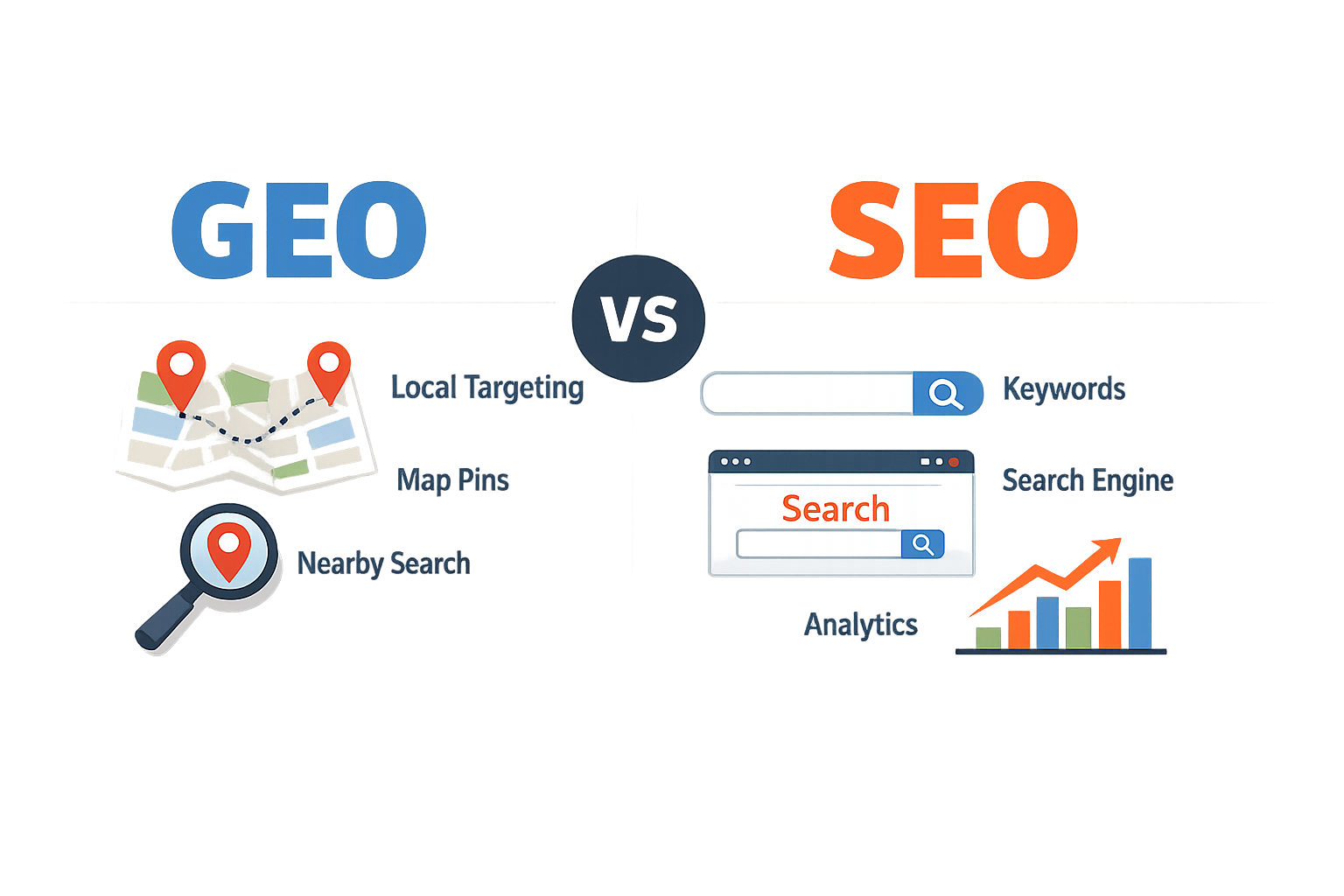
This creates two optimization problems. SEO — search engine optimization — targets crawlers, links, and ranking algorithms. GEO — generative engine optimization — targets the training data, citation logic, and answer synthesis that power LLMs. The tactics diverge. The measurement frameworks diverge. The content formats sometimes diverge.
I spent two decades selling enterprise software before I started writing production AI systems. When I built the first version of what became our GEO SEO framework, the biggest surprise was how much of traditional SEO still applied. Google's own guidance confirms it: focus on visitors, provide unique content, add value. That advice carries across to AI experiences.
Our core goal remains the same: to help people find outstanding, original content that adds unique value.
The question isn't whether to abandon SEO for GEO. It's how to operate both without doubling your workload or fragmenting your content strategy. The sections that follow break down the shift, the overlaps, and the specific changes that matter when you're trying to show up in both traditional search and AI-generated answers.
Understanding the Problem: The Shift in Digital Marketing
Search stopped being a bridge to the web. In 2024, 58.5% of American Google searches ended without a click to any site. In the EU, the number hit 59.7%. More than half of all queries now resolve inside the search engine itself — no traffic, no visit, no conversion event you can measure.
The Zero-Click Problem
Google answers the question before you leave the page. AI Overviews, featured snippets, knowledge panels, and instant answers extract what used to require a click. The SERP became the destination. Traditional SEO assumed you won the game when you ranked — now ranking alone guarantees nothing.
This shift forced a vocabulary problem. SEO described optimizing for traditional blue-link rankings. But when the engine generates its own answer and cites you as a source — or doesn't cite you at all — the old playbook stops working. You need a strategy for how to rank in AI search results, not just traditional SERPs.
Why GEO vs SEO Matters Now
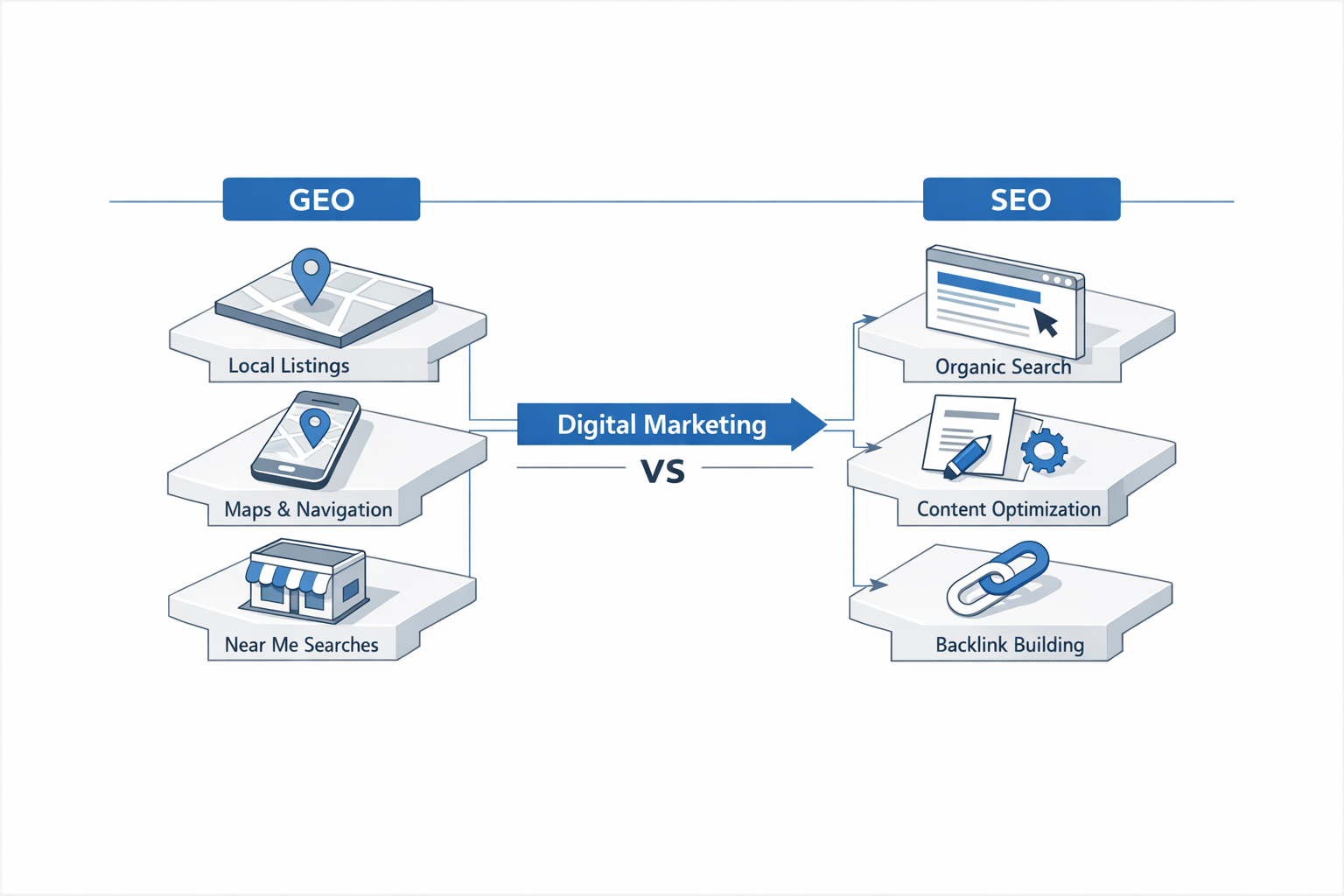
Generative Engine Optimization targets the new surface: the synthesized answer, the LLM citation, the AI-generated summary. SEO still matters for the shrinking pool of queries that produce clicks. But the two disciplines optimize for different endpoints. SEO chases rankings and clickthrough. GEO chases inclusion in the generated answer.
The SERP used to be a menu. Now it's the meal.
Publishers and marketers who treat them as the same discipline lose twice — they optimize for rankings that don't convert and miss the citation opportunities that do. The problem isn't that SEO died. The problem is that the game added a second board, and most players are still staring at the first one.
Solution Steps: Adapting to Changes in GEO and SEO
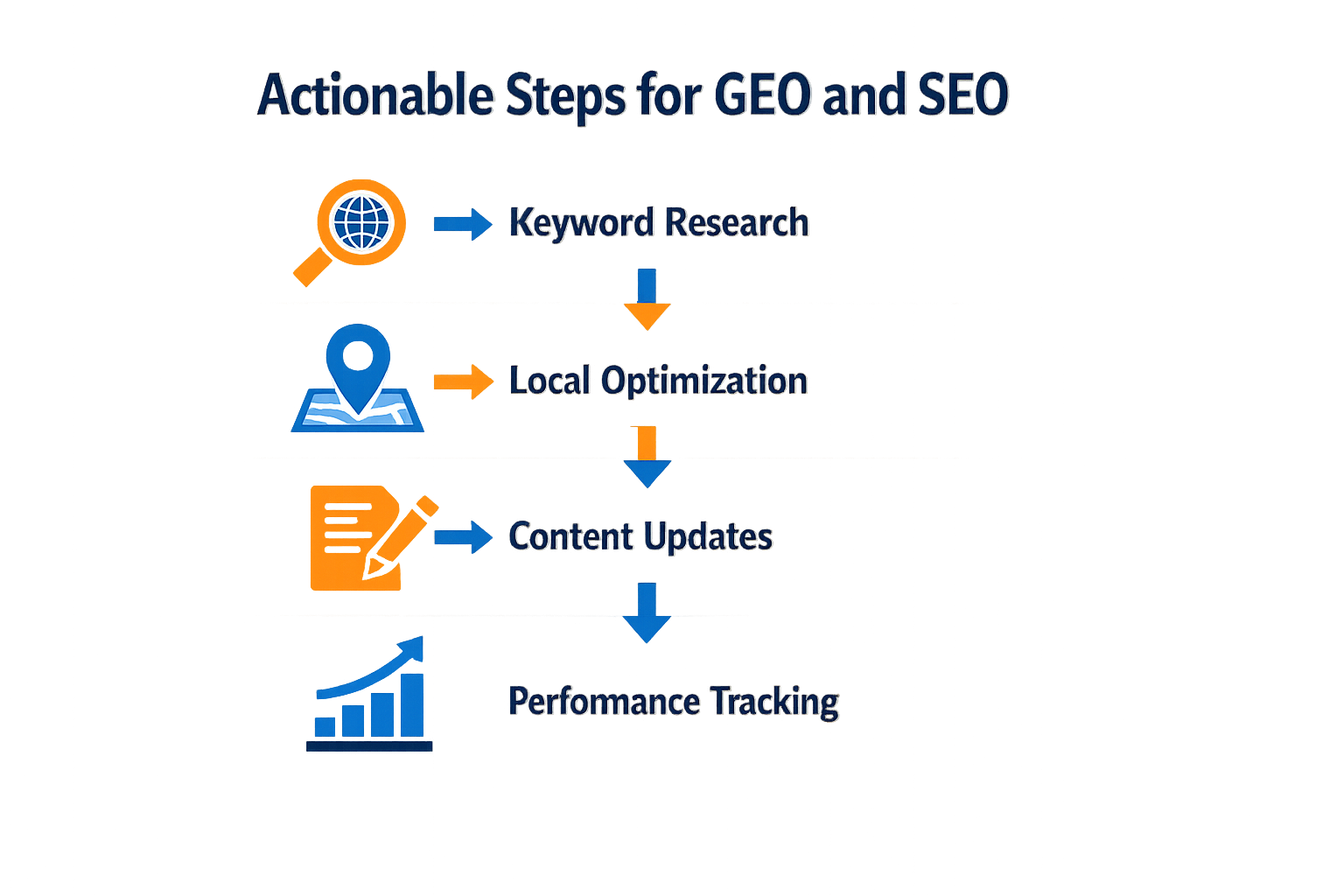
Adapting to the split between traditional SEO and generative engine optimization requires concrete changes to how you build and publish content. The core principle remains unchanged: satisfy the visitor. The execution shifts.
Step 1: Audit Your Content Against Visitor Satisfaction
Step 1
Audit content against visitor satisfaction
Review your top 20 pages by traffic. Ask: does this page answer the question completely, or does it send the reader elsewhere to finish the task? If your content requires three more clicks to deliver value, it fails the satisfaction test. Rewrite to answer the question on the page.
Google's helpful content guidance states plainly that content performs well when visitors feel they've had a satisfying experience. That applies whether a human reads your page or an LLM summarizes it. Incomplete answers get deprioritized in both contexts.
Step 2: Structure for Both Human Readers and Machine Parsers
Step 2
Structure for dual audiences
Use clear headings, short paragraphs, and scannable lists. Add schema markup where it applies—FAQPage, HowTo, Article. Machines parse structure; humans scan it. When both can extract your meaning quickly, you win in traditional search and in AI-generated answers.
The format that works for a reader skimming on mobile is the same format that works for an LLM extracting facts. Clean structure is not a new requirement—it's now doubly rewarded.
Step 3: Prioritize Unique Value Over Keyword Density
Step 3
Prioritize unique value
Identify what you know that others don't. Write that. If your page repeats the same five facts every competitor lists, it has no unique value. Google's long-standing advice is to focus on visitors and provide unique, satisfying content—that positions you as search evolves.
Keyword placement still matters for traditional SEO, but it no longer compensates for thin content. The shift to GEO accelerates this: LLMs cite sources that add new information, not sources that restate common knowledge.
Step 4: Test Content Performance in Both Contexts
Measure traditional rankings and monitor whether your content appears in AI-generated answers. If you rank well in Google but never get cited by ChatGPT or Perplexity, your content likely lacks the directness or authority that LLMs prefer. If you get cited but don't rank, your on-page SEO fundamentals need work. For a detailed breakdown of ranking in AI systems, see How to Rank in AI Search Results: A Practical Guide.
Step 5: Refresh Content to Maintain Relevance
Step 5
Refresh content regularly
Set a quarterly review for high-value pages. Update stats, add new sections when the topic evolves, and remove outdated claims. Stale content loses ranking in traditional search and gets ignored by LLMs trained on newer data. Fresh content signals ongoing value.
The mechanics of refreshing content are the same whether you're optimizing for GEO or SEO. The difference is urgency: LLMs can bypass outdated pages entirely if newer sources exist.
Tips and Tricks for Balancing GEO and SEO
Balancing GEO vs SEO means running two content strategies in parallel — one optimized for clicks, one optimized for citations. Most teams can't afford to maintain separate content stacks, so the practical approach is to build assets that serve both.
Start with User Intent, Not Channel
Content that doesn't meet visitor expectations won't perform in either channel. Before you write, define what the searcher actually needs — an answer, a comparison, a procedure, or a product spec. Then deliver it in the first two paragraphs. Traditional SEO rewards engagement metrics; GEO rewards clarity and citation-worthiness. Both start with the same foundation: give people what they came for.
Structure for Scannability and Extraction
AI models parse structured content more reliably than narrative prose. Use short paragraphs, descriptive headings, and bullets where appropriate. Schema markup — especially FAQ, HowTo, and Article types — gives both traditional crawlers and LLMs cleaner extraction targets.
For procedural content, numbered steps with clear outcomes work in both contexts. For comparisons, tables beat paragraphs every time. The goal is to make your content easy to cite and easy to click through.
The cheapest way to serve two channels is to write once in a format both can parse.
Track Both Click and Zero-Click Performance
In 2024, nearly 59% of searches result in zero clicks. That means traditional click-through rate is no longer a complete success metric. You need to track:
- Impressions and CTR for traditional SEO
- Citation frequency in AI answers (manual spot-checks or tools that monitor LLM outputs)
- Brand mention volume in answer engines
- Traffic from AI-referred sessions (users who see your brand in an AI answer, then search directly)
If a page ranks in position three but gets cited in ChatGPT answers twice a week, that's a win even if CTR is flat. Conversely, high CTR with zero AI visibility means you're missing half the search landscape.
Prioritize High-Intent, High-Clarity Topics
Not every page needs to serve both channels. Transactional pages — product specs, pricing, contact forms — still live in the traditional SEO world. But informational content, especially how-to guides, definitions, and comparisons, should be built for dual use.
For a practical framework on prioritizing which content to optimize for AI answers, see Building a GEO Strategy: Prioritizing Content for AI Answers.
Refresh Content with AI-Friendly Updates
Older pages built for keyword density and backlink volume often lack the structure AI models prefer. A refresh doesn't mean rewriting from scratch — it means:
- Adding a concise summary at the top
- Breaking long paragraphs into scannable chunks
- Including schema markup if it's missing
- Updating stats and citations to current sources
A 2019 blog post with solid information but poor structure won't get cited. The same content, reformatted with clear headings and a summary block, will.
Step 1
Audit your top 20 pages
Pull your highest-traffic informational pages from the last 90 days. Check each for: summary block in the first 200 words, H2/H3 structure, schema markup, and citation-worthy stats. Flag any page missing two or more elements.
Step 2
Add structure before chasing new content
For each flagged page, add a summary, clean up headings, and insert schema. Test the page in a few AI search tools to see if it gets cited. If it does, repeat the process for the next batch. If it doesn't, the content itself may need a rewrite — not just reformatting.
Conclusion: The Future of GEO and SEO
GEO vs SEO is not a zero-sum contest. Traditional search optimization built the foundation; generative engine optimization extends it into AI-driven answer surfaces. The core principles remain: original content, clear structure, and user value.
Google's stated position is direct: "Focus on your visitors and provide them with unique, satisfying content. Then you should be well positioned as Google Search evolves, as our core goal remains the same: to help people find outstanding, original content that adds unique value." That guidance applies equally to blue-link rankings and AI Overview citations.
Our core goal remains the same: to help people find outstanding, original content that adds unique value.
The operational shift is in measurement and distribution. SEO metrics track clicks and positions; GEO metrics track citations and answer inclusion. Both matter. A page that ranks well but never gets cited in an AI Overview misses half the visibility landscape. A page cited frequently but buried on page three misses the other half.
What Stays Constant
Structured data, authoritative sourcing, and clear answers to real questions work in both systems. Schema markup that helps Google parse a product specification helps an LLM extract the same data. A well-cited claim that builds trust with a human reader builds trust with a retrieval model. The mechanics differ; the underlying quality signals do not.
I have spent twenty-five years watching enterprise technology vendors chase the next platform shift. The ones that survived did not abandon the old channel when the new one emerged—they ran both in parallel, measured both, and optimized for the intersection. That same logic applies here.
What You Should Do Next
Audit your top-performing pages for AI Overview inclusion. If they rank but do not get cited, add structured answers, cite primary sources, and simplify the opening paragraph. If they get cited but do not rank, strengthen the traditional signals: internal links, title optimization, and backlink acquisition.
Run both playbooks. Measure both outcomes. Adjust based on where your audience actually finds you. For a detailed framework on AI search rankings, see How to Rank in AI Search Results: A Practical Guide.
The future of GEO and SEO is not one replacing the other. It is both running concurrently, with shared fundamentals and divergent tactics. The marketers who win will be the ones who stop debating the labels and start optimizing for both surfaces.