
Introduction
Affiliate marketing platforms operate on fundamentally different commission models. Some pay flat fees per action. Others offer percentage-based revenue shares that scale with order value. A handful tier their payouts based on monthly performance thresholds.
The question isn't which platform pays the most in absolute terms. It's which platform pays the most given your traffic profile, conversion rates, and content distribution strategy. A 50% commission on a $20 product pays less than 5% on a $600 product if your conversion rates hold steady.
I've spent two decades building systems that surface the right content to the right audience. At Xenco Labs, we measure how AI systems retrieve and rank information. That work taught me something counterintuitive: the affiliate marketing platform that pays best is the one whose offers your audience already wants, not the one with the highest headline rate. When traditional search sends fewer clicks — answer engines and AI systems now determine most content discovery — matching offer intent to query intent becomes the entire game.
Commission rates matter. But payout speed, cookie duration, approval thresholds, and platform reliability often determine actual earnings more than the advertised percentage. This article walks through the structural differences between major affiliate platforms, the commission models they use, and how to evaluate which one pays best for your specific situation.
Problem Statement
Affiliate marketers face a structural visibility problem before they ever compare commission rates. In 2024, 58.5% of US Google searches and 59.7% of EU searches resulted in zero clicks to the open web. Searchers either ended their session entirely or changed their query without visiting a single affiliate site. When the majority of search traffic never reaches your content, commission percentages become academic.
The Commission Comparison Trap
Most affiliates optimize for the wrong metric. They compare headline commission rates across platforms without accounting for conversion friction, cookie windows, or attribution models. A 50% commission on a product no one buys pays less than a 5% commission on a product that converts. The platforms with the loudest commission claims are often the ones with the thinnest product catalogs or the shortest cookie durations.
Commission structures vary wildly by vertical. SaaS affiliate programs may pay recurring revenue share over 12 months. Physical goods pay flat percentages per transaction. Lead-gen offers pay per qualified signup, regardless of downstream conversion. Comparing these models side-by-side without normalizing for customer lifetime value or average order value produces meaningless rankings.
The Attribution and Tracking Problem
Cookie windows create silent commission loss. A 24-hour window means any purchase made 25 hours after the initial click pays nothing. Platforms with 30-day or 90-day windows capture delayed purchases that shorter windows miss. Cross-device tracking failures compound the problem — a click on mobile that converts on desktop may not attribute if the platform's tracking pixel doesn't persist across sessions.
Some platforms use last-click attribution. Others use first-click. A few use multi-touch models that split credit across multiple affiliates. When you compare commission rates without knowing the attribution model, you're comparing incompatible numbers. A 10% first-click commission may pay more over time than a 15% last-click commission if your traffic sits early in the buyer journey.
The Content Quality Filter
Google's helpful content guidelines penalize affiliate sites that exist solely to drive clicks without adding substantive value. Evaluating your content against Google's self-assessment questions determines whether your affiliate site survives algorithm updates. If your pages fail that audit, commission rates are irrelevant — your traffic disappears before it can convert.
The platforms that pay the highest commissions often have the weakest brand recognition. Lower brand trust means higher bounce rates and lower conversion rates. A 40% commission on a product no one has heard of underperforms a 10% commission on a brand that converts at three times the rate. The commission structure matters less than the conversion math.
Solution Steps
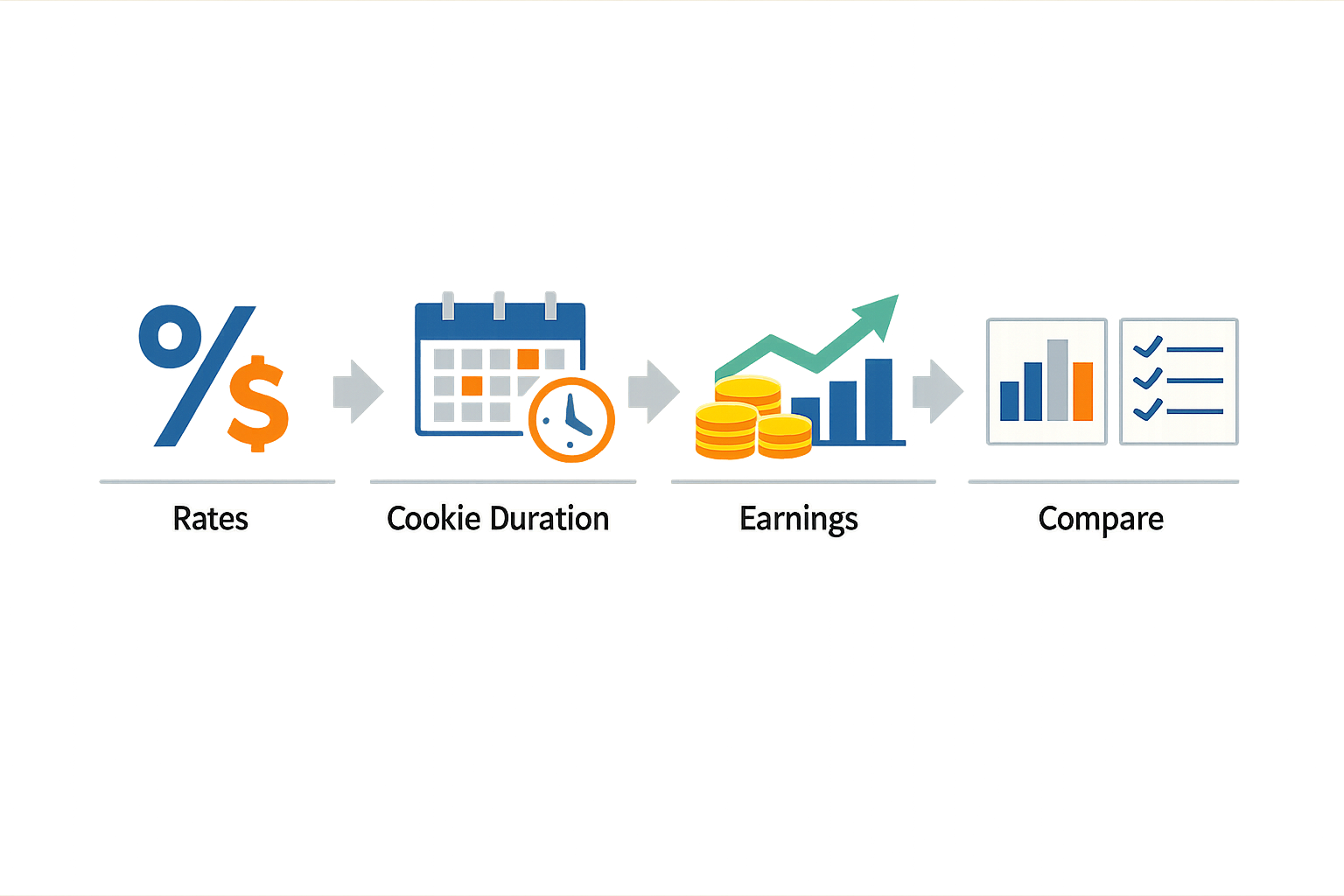
Evaluating affiliate marketing platforms for commission rates requires a methodical approach. The platforms that pay the most on paper often carry hidden costs — transaction fees, delayed payouts, or restrictive terms that erode your actual take-home. Here's how to evaluate them.
Step 1: Catalog Commission Structures by Type
Step 1
Catalog commission structures by type
List each platform's commission model: percentage of sale, flat fee per conversion, recurring subscription cut, or hybrid. Amazon Associates pays 1–10% depending on category. High-ticket B2B platforms like HubSpot or Salesforce pay flat bounties per qualified lead, sometimes $500–$1,000. SaaS platforms with recurring revenue share (20–30% monthly) compound over customer lifetime. Write down the model, the rate, and any caps or tiers.
Step 2: Calculate Effective Payout After Fees
Step 2
Calculate effective payout after fees
Subtract payment processing fees, minimum payout thresholds, and currency conversion costs. A 10% commission becomes 8.5% after a 1.5% processor fee. If the platform holds payouts until you hit $100 and your average monthly earnings are $80, you're carrying unpaid receivables for months. Build a spreadsheet: gross commission, minus fees, minus opportunity cost of delayed payment.
Step 3: Audit Performance Drop Patterns
Step 3
Audit performance drop patterns
Identify which affiliate pages lost traffic or conversions in the past quarter. Cross-reference those pages against the platforms they promote. If a platform's cookie window shortened or its product catalog shifted, your conversion rate drops even if traffic holds steady. Track this monthly. When one platform consistently underperforms, the nominal commission rate is irrelevant — you're optimizing for a number you never collect.
Step 4: Compare Cookie Duration and Attribution Windows
Cookie duration determines how long after a click you earn credit. Amazon's 24-hour window means you lose the sale if the customer returns the next day. Other platforms offer 30, 60, or 90 days. Longer windows capture delayed purchases and research cycles. For high-consideration products — software, insurance, enterprise tools — a 90-day window often doubles your effective commission rate compared to a 24-hour window, even if the nominal rate is lower.
Assess Platform Reliability and Reporting Transparency
Platforms that pay the highest rates but report conversions inconsistently cost you more than platforms with lower rates and clean dashboards. If you can't reconcile clicks to conversions, you can't optimize. Look for real-time reporting, API access, and clear definitions of what counts as a qualified action. Platforms that revise conversions retroactively or attribute sales to other affiliates without explanation are not worth the headline rate.
How to Rank in AI Search Results: A Practical Guide covers visibility strategies that drive qualified traffic to your affiliate content, which matters more than the commission rate when the traffic converts.
The platform that pays the most is the one whose reporting you trust enough to bill your time against.
Tips and Tricks
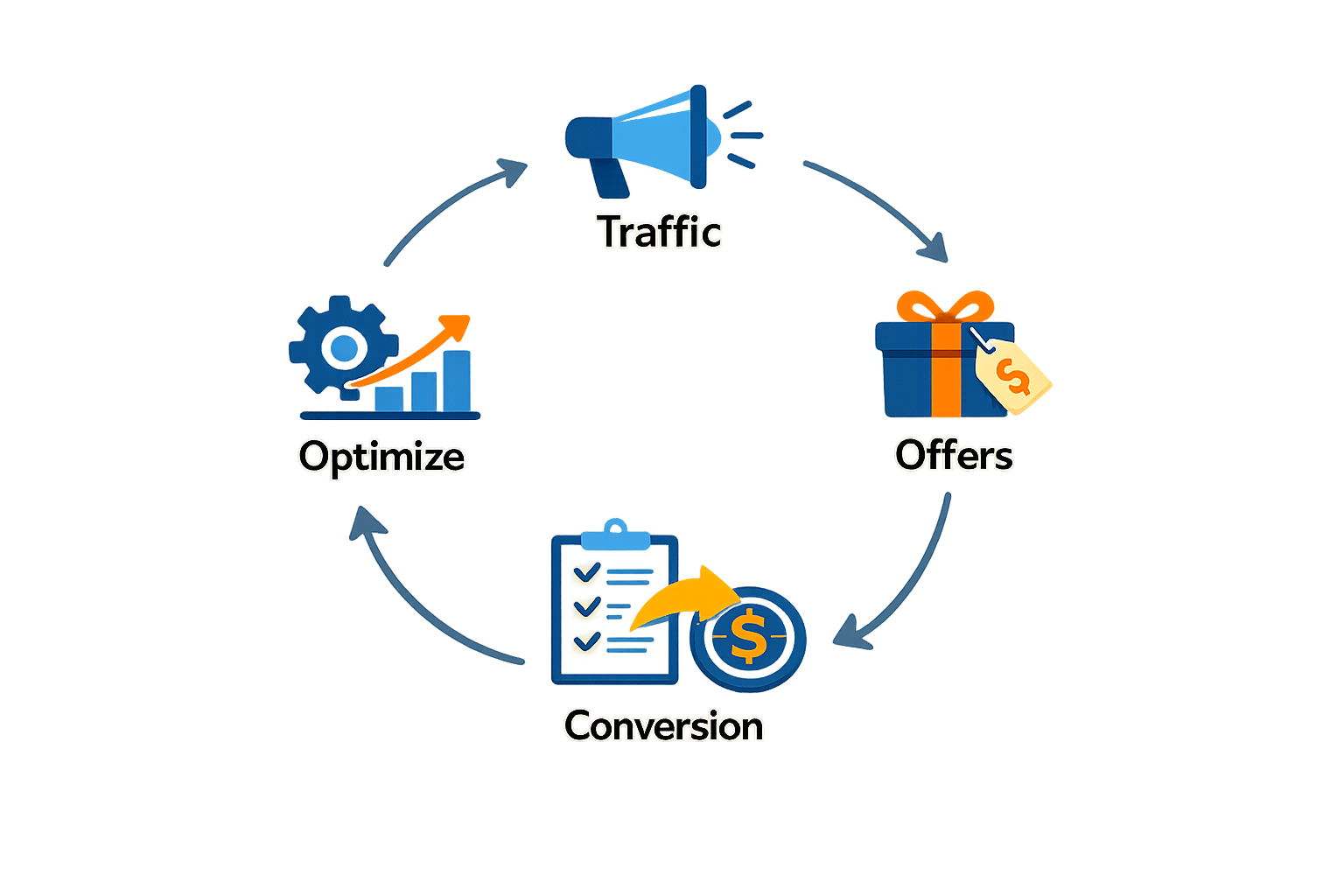
Maximizing earnings from any affiliate marketing platform requires deliberate measurement and content discipline. High commission rates mean nothing if your traffic never converts.
Track what actually drives conversions
Most affiliate dashboards show clicks and payouts. That tells you what happened, not why. Use Google Analytics or a similar tool to track time on page and conversion paths. Clicks from engaged visitors convert at higher rates than raw traffic volume. When you know which pages hold attention and which bounce, you can double down on what works.
Build content people trust enough to act on
Commissions come from recommendations visitors believe. Before you publish, ask whether someone unfamiliar with your site would trust the claim enough to click through and buy. If the answer is uncertain, get feedback from someone outside your operation. Honest assessment from an unaffiliated reader surfaces blind spots faster than any internal review.
Content that answers a specific question outperforms content that lists options. Write for the person comparing two products, not the person browsing twenty.
The affiliate link that converts is the one placed after you've already answered the question the visitor came to solve.
Audit what stopped working
When traffic or conversions drop, identify which pages lost ground and for which queries. Look at those pages against the evaluation criteria that matter: does the content directly answer what the visitor searched for, or does it assume they'll read three paragraphs before finding the point? Tighten the gap between the query and the answer.
For more on aligning content to how AI systems surface answers, see What Is Answer Engine Optimization? AEO for Beginners.
Measure engagement, not just clicks
Clicks tell you someone left your site. Engagement tells you whether they stayed long enough to trust your recommendation. Visitors who spend more time on your content convert at higher rates because they've absorbed enough context to make a decision. Track session duration and scroll depth alongside click-through rates to understand which content builds confidence and which just generates exits.
Conclusion
Choosing the right affiliate marketing platform is not a one-time decision. Commission rates shift. Networks consolidate. Tracking breaks. The platform that paid best last quarter may not pay best next quarter.
The operators who earn consistently do three things well: they track their own numbers, they read the program terms before they promote, and they build relationships with affiliate managers who answer the phone when a payment goes missing. Commission percentage is one variable. Payment reliability, cookie duration, and conversion rate matter just as much.
I spent twenty-five years in enterprise technology before I started building software myself. The lesson transfers: the vendor who pays the highest rate is not always the vendor whose check clears on time. Run your affiliate business like a business — spreadsheet the conversions, test the landing pages, and know which platforms actually convert your traffic before you scale spend.
Start with platforms that match your audience and your content. A high commission on a product no one buys is worth less than a modest commission on a product that converts. Track performance for sixty days, compare earnings per click across programs, and move traffic to the platforms that pay.
For a broader view of how search visibility drives affiliate conversions, see How to Rank in AI Search Results: A Practical Guide. The platforms that surface your content in AI-driven search results deliver traffic that converts — users who click from those results spend more time on your site and are more likely to complete a purchase.
Pick the platform that fits your workflow, pays on schedule, and converts your audience. Everything else is noise.