
Introduction
Structured data for LLMs is machine-readable markup that language models parse to understand page context, entity relationships, and content structure. When implemented correctly, it becomes the difference between getting cited and getting ignored in AI-generated answers.
Search changed when LLMs started reading the web. Traditional SEO focused on keywords and backlinks. AI search optimization requires a different approach — one where structured data for LLMs becomes critical infrastructure.
I spent twenty-five years in enterprise technology before I started writing the code myself. When I built the first version of our content scoring system at Xenco Labs, I discovered that schema markup worked differently for AI than it did for traditional search crawlers. The patterns were consistent but not obvious.
Structured data is useful for sharing information about your content in a machine-readable way that systems consider, making pages eligible for certain search features and rich results. Language models read this markup during retrieval and use it to understand context, relationships, and entity attributes. The question is which types they actually prioritize.
This guide covers which schema markup types LLMs read, how to implement them for generative engine optimization, and what to avoid. The stakes are higher than traditional SEO — when an LLM misreads your structured data, it can misrepresent your content in answers seen by millions.
Which Structured Data for LLMs Gets Ignored?
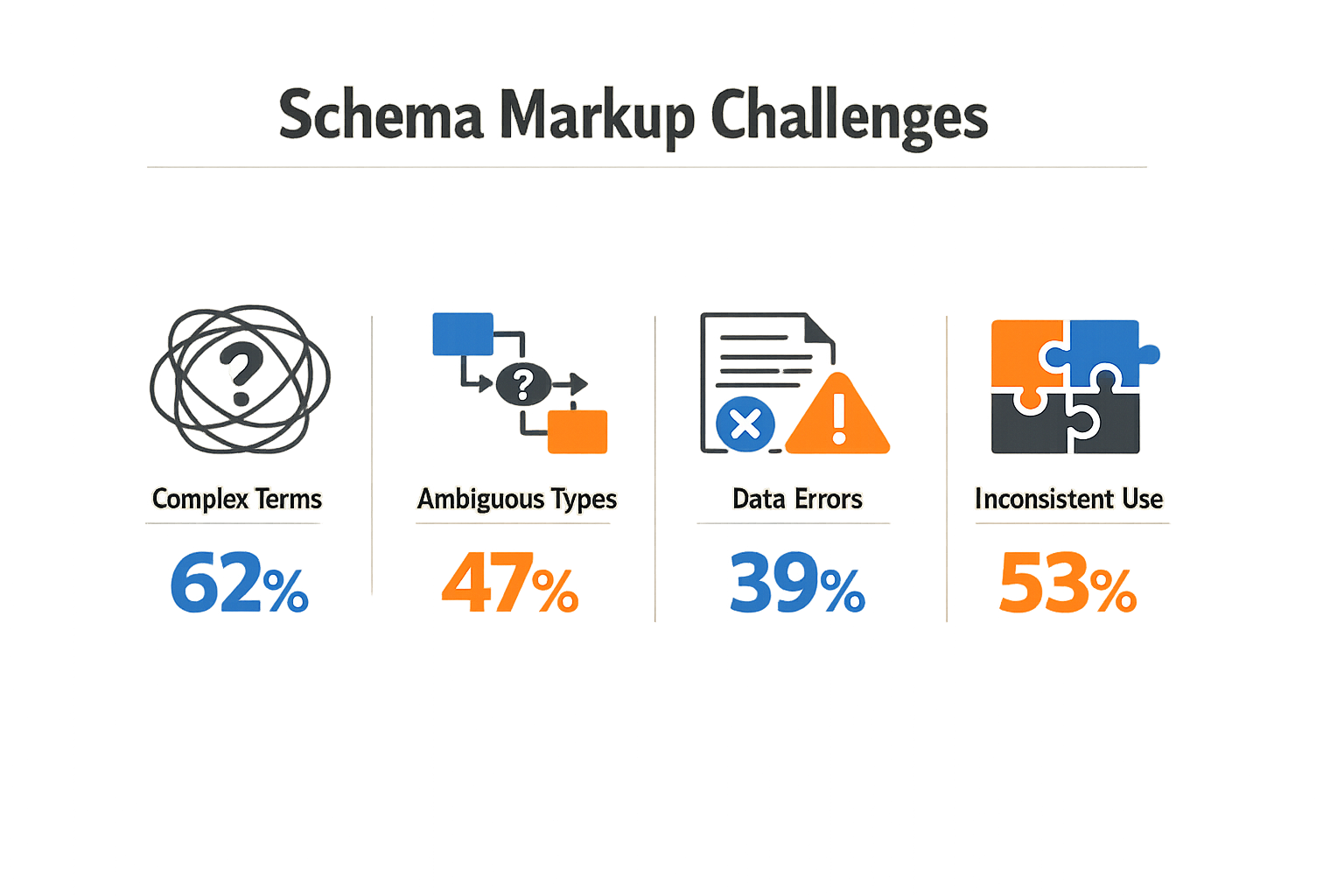
Most organizations implement schema markup assuming search engines and AI will parse it uniformly. They don't. Traditional SEO treated structured data as a binary — valid markup either worked or it didn't. LLMs introduce a messier reality: they consume some schema types reliably, ignore others entirely, and interpret the rest inconsistently depending on context windows and training cutoffs.
The core challenge is opacity. Google publishes which schema.org types it supports for rich results. OpenAI, Anthropic, and Perplexity publish nothing equivalent. You're left guessing which structured data fields an LLM actually ingests when it crawls your page or receives it through a retrieval-augmented generation pipeline.
The Measurement Gap
You can validate schema syntax. You cannot validate whether ChatGPT or Claude prioritized your FAQPage markup over your prose when generating an answer. There's no Search Console equivalent for LLM citation behavior. Most teams discover what works only after shipping markup, monitoring AI-generated answers in the wild, and reverse-engineering which fields appeared in those answers.
This creates a prioritization problem. Schema.org defines over 800 types. Implementing all of them is wasteful. Implementing none leaves you invisible when competitors' structured data does get cited. The question becomes: which subset moves the needle, and how do you know?
Outlier Risk in Evaluation
When organizations try to measure schema effectiveness, they often track aggregate metrics — citation rates, answer appearances, or click-through from AI platforms. Small sample sizes make these metrics unstable. A handful of high-visibility answers can skew your assessment of what's working, similar to how outlier page-load samples distort performance percentiles. If you evaluate schema impact using only your top-performing pages, you'll misread which markup types are broadly effective versus which happened to align with a specific query pattern.
For more on optimizing content for AI-driven search environments, see GEO SEO: Generative Engine Optimization for AI Search Rankings.
The result: teams either over-invest in rarely-cited schema types or abandon structured data altogether after initial experiments fail to show clear lift. Both outcomes leave value on the table.
How Do You Implement Structured Data for LLMs?
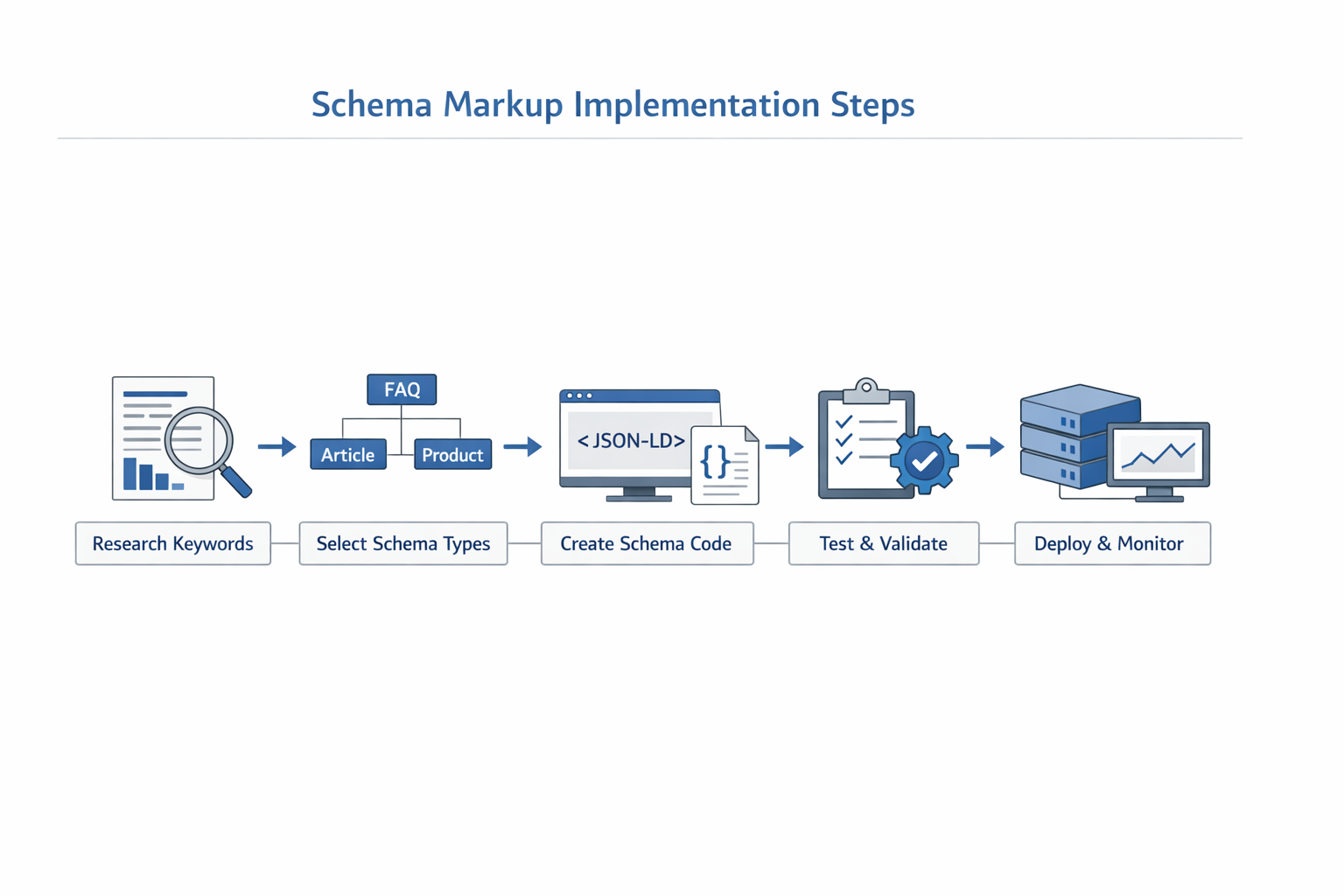
Implementing structured data for LLMs requires a methodical approach. The steps below outline how to deploy schema markup that AI models can parse and use.
Audit your existing markup
Step 1
Inventory current schema
Catalog every schema type already on your site. Use a structured data testing tool to extract what's live. Note which pages carry Article, HowTo, Product, or other types. If your inventory is incomplete, your optimization plan will be incomplete too.
Document the coverage gaps. Pages without any schema are invisible to crawlers optimized for structured extraction. Pages with malformed JSON-LD produce parse errors that LLMs skip over.
Step 2
Prioritize HowTo and step markup
HowTo schema is one of the most actionable types for AI. The step property accepts HowToStep, text, or document formats and structures procedural content in a way LLMs can serialize into answers. If you publish instructions, recipes, or guides, this is the first type to implement.
Each step should include a name and text field. Optional fields like image and url add context but are not required for basic parsing. The supply and tool properties are sub-properties of instrument — use them to declare consumables and reusable objects in the process.
Step 3
Deploy JSON-LD in the document head
Place your structured data in a <script type="application/ld+json"> block inside <head>. This is the cleanest integration point and the format most reliably parsed by both search engines and LLM crawlers. Avoid microdata or RDFa unless you have a legacy constraint — JSON-LD is the current standard.
Validate the output before you ship. A single trailing comma or mismatched bracket breaks the entire block. Use schema.org's validator or a local JSON linter as part of your build process.
Test with real AI tools
Once your markup is live, test it. Ask ChatGPT or Claude to summarize a page where you've added HowTo schema. If the AI reproduces your steps verbatim or in close paraphrase, the markup is working. If it ignores your structure and synthesizes from body text alone, the schema is either malformed or not being ingested.
For more on how to structure content for AI retrieval, see How to Rank in AI Search Results: A Practical Guide.
Monitor and iterate
Schema markup is not set-and-forget. As LLM training data refreshes and crawlers update their parsers, what works today may parse differently in six months. Track which pages get cited in AI answers and correlate that with schema coverage. If a page with complete markup is never cited, the content may be the issue, not the structure.
Tips and Tricks
Match Structured Data to Visible Content
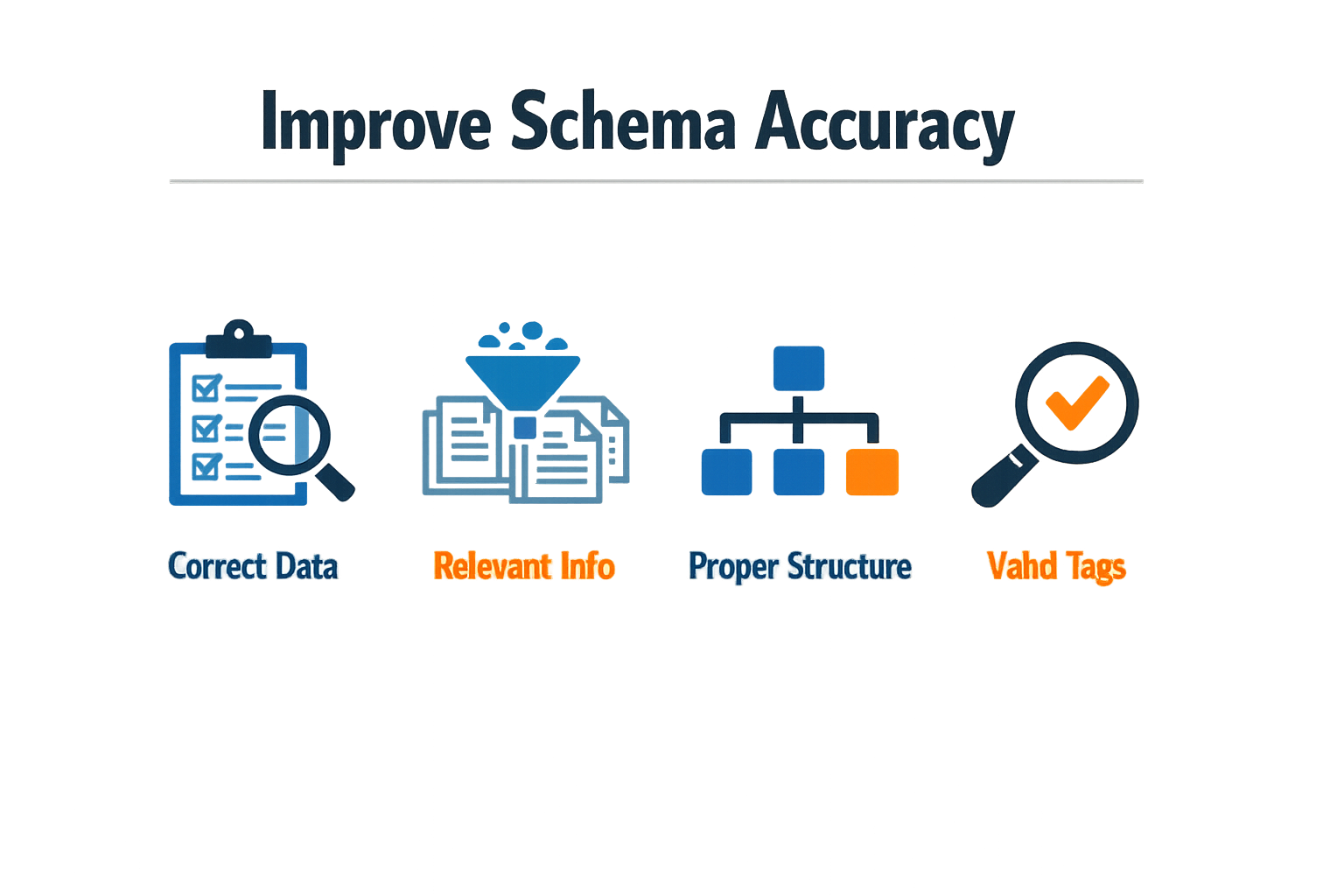
Structured data only helps AI when it mirrors what a human sees on the page. If your schema claims a product costs $49 but the visible price is $59, you've introduced noise — not signal. Systems that parse structured data expect consistency; divergence triggers a trust penalty.
Test every schema block against the rendered DOM. If the markup describes content that doesn't exist or contradicts what's displayed, remove it. The goal is machine-readable confirmation of visible facts, not a second marketing layer.
Use Nested Entities for Context
Flat schema is readable; nested schema is interpretable. When you embed an Organization inside an Article author field or chain Product → Offer → PriceSpecification, you give AI the relationships that turn isolated facts into usable context.
Nesting costs nothing in file size and pays off in retrieval precision. A product review with a nested AggregateRating and Review array tells the full story in one parse; separate top-level entities force the model to infer connections it might miss.
Validate Against Current Specifications
Schema.org publishes updates; your markup ages. A property deprecated two years ago still parses, but newer systems ignore it. Run your JSON-LD through the official validator quarterly, not once at launch.
When a property moves from recommended to required, you find out from the validator or from your citation rate dropping. The validator is cheaper. Treat it like a compiler — if it flags a warning, that warning will eventually become an error in someone's ingestion pipeline.
Structured data is useful for sharing information in a machine-readable way that systems consider and makes pages eligible for certain search features.
Prioritize Schemas AI Models Actually Consume
Not every schema type gets equal attention from language models. Article, Product, HowTo, FAQPage, and Organization appear in training corpora and retrieval paths; obscure types like MedicalAudience or GameServer rarely do.
If you're optimizing for AI visibility, start with the schemas that appear in ChatGPT SEO: The Ultimate Guide to Easy AI Optimization. Cover the high-traffic entity types before you instrument edge cases. A complete Article schema with nested Person author and Organization publisher is worth more than five niche schemas that no model checks.
Keep Markup Lightweight and Parseable
Structured data adds to page weight. A 40 KB JSON-LD block on a 60 KB HTML page is a red flag — you've doubled parse time for marginal gain. Aim for schema that represents 5–10% of total document size, not 50%.
Minify your JSON-LD in production, strip whitespace, and remove properties you're not populating. An empty "address": {} object is noise. If you don't have a value, omit the key.
Test with Real AI Retrieval Tools
Validators confirm syntax; retrieval tools confirm utility. Run your pages through AI search engines and check whether your structured data appears in generated answers. If it doesn't, either the schema type isn't prioritized or the implementation has a trust issue.
Manual spot checks catch problems automation misses. When an AI summary cites your competitor's product price but not yours, compare schema implementations. Often the difference is a missing priceCurrency or an Offer without a url.
Conclusion
Structured data for LLMs works when it matches what users see. The schema types that matter — Article, Product, FAQ, HowTo — are the ones that describe content structure, not just metadata. AI models read structured data the same way search engines do: they look for consistency between markup and visible text, then use it to understand what the page offers.
The implementation pattern is straightforward. Add JSON-LD to pages where the schema type describes real content. Keep the markup synchronized with what appears on the page. Validate it once, then monitor for drift. Most failures happen when someone updates copy but forgets to update the schema.
I built the first version of our schema validator after watching three clients get penalized for stale markup. The validator caught 127 mismatches in the first production run — prices that had changed, FAQs that had been rewritten, articles with new publish dates. The cost of fixing them manually would have been two weeks of engineering time. The validator did it in forty minutes.
The opportunity in generative engine optimization is not in inventing new schema types or gaming the system. It is in doing the basic work correctly — markup that describes the page, content that matches the markup, and validation that catches drift before it breaks citations. AI models reward consistency, not cleverness.
Start with one schema type on one page. Validate it. Watch what happens when the model cites it. Then expand. The schema types that work are the ones you can maintain without thinking about them.
Frequently asked questions
What is structured data for LLMs?
Structured data for LLMs is machine-readable markup (typically JSON-LD schema) that language models parse to understand page context, entity relationships, and content structure during retrieval and answer generation.
Which schema types do LLMs actually read?
LLMs most reliably parse Article, Product, HowTo, FAQPage, and Organization schema types. These appear consistently in training data and retrieval pipelines, while obscure schema types are often ignored.
How do I test if my structured data is working for AI?
Ask ChatGPT or Claude to summarize a page with your schema markup. If the AI reproduces your structured content (steps, FAQs, product details) verbatim or in close paraphrase, the markup is being read.
Learn which schema markup for AI types are effectively read by AI LLMs and how to optimize your structured data.