
Introduction
Every business wants better search visibility. Most operate on tight budgets. The gap between those two facts creates a market full of cheap SEO offers that promise the world and deliver almost nothing.
I spent years building enterprise software before I started writing code myself. I watched companies spend six figures on SEO agencies that produced reports instead of rankings, and I watched others hire $200/mo contractors who did even less. The pattern was the same: nobody knew what they were buying until the invoice came due and the needle hadn't moved.
Affordable SEO services exist. They work when you understand what affordable actually buys you, where quality shows up in the work, and which trade-offs break the entire effort. This article walks through how to find SEO services that deliver measurable results without burning budget on tactics that were obsolete five years ago.
The challenge is not finding cheap SEO. The challenge is finding competent work at a price you can sustain long enough to see results. Search rankings move slowly. If your budget forces you to stop after three months, you paid for nothing.
Problem Statement
Most businesses shopping for affordable SEO services hit the same wall: the cheap options skip the work that actually moves rankings, and the transparent providers cost more than the budget allows. The under-$300/month tier often delivers thin reports and bulk link packages that look like progress but produce no measurable traffic gain.
The Three Failure Modes
Affordable SEO collapses in predictable ways. The first is the vague-scope contract — you pay monthly but never see a task list, a timeline, or a named person doing the work. The second is the hundred-backlinks-per-month package, where quantity substitutes for relevance and the links come from directories no one reads. The third is opacity: the provider won't name the tools they use, won't explain their techniques, and won't show you the raw data behind the PDF they email each month.
The cost of these failures isn't just wasted budget. It's the six months you spend waiting for results that never arrive, while competitors who invested in structured data and schema markup start capturing the traffic you needed. By the time you realize the cheap option was expensive, you're starting over with a deficit.
What Quality Actually Requires
Quality SEO demands transparency about deliverables, named tools, and a scope that includes the unglamorous work — technical audits, page-speed fixes, schema implementation — that most budget packages omit. When a provider can't or won't answer basic questions about their process, the affordability is an illusion. You're paying for activity, not outcomes, and the difference compounds over time.
Solution Steps
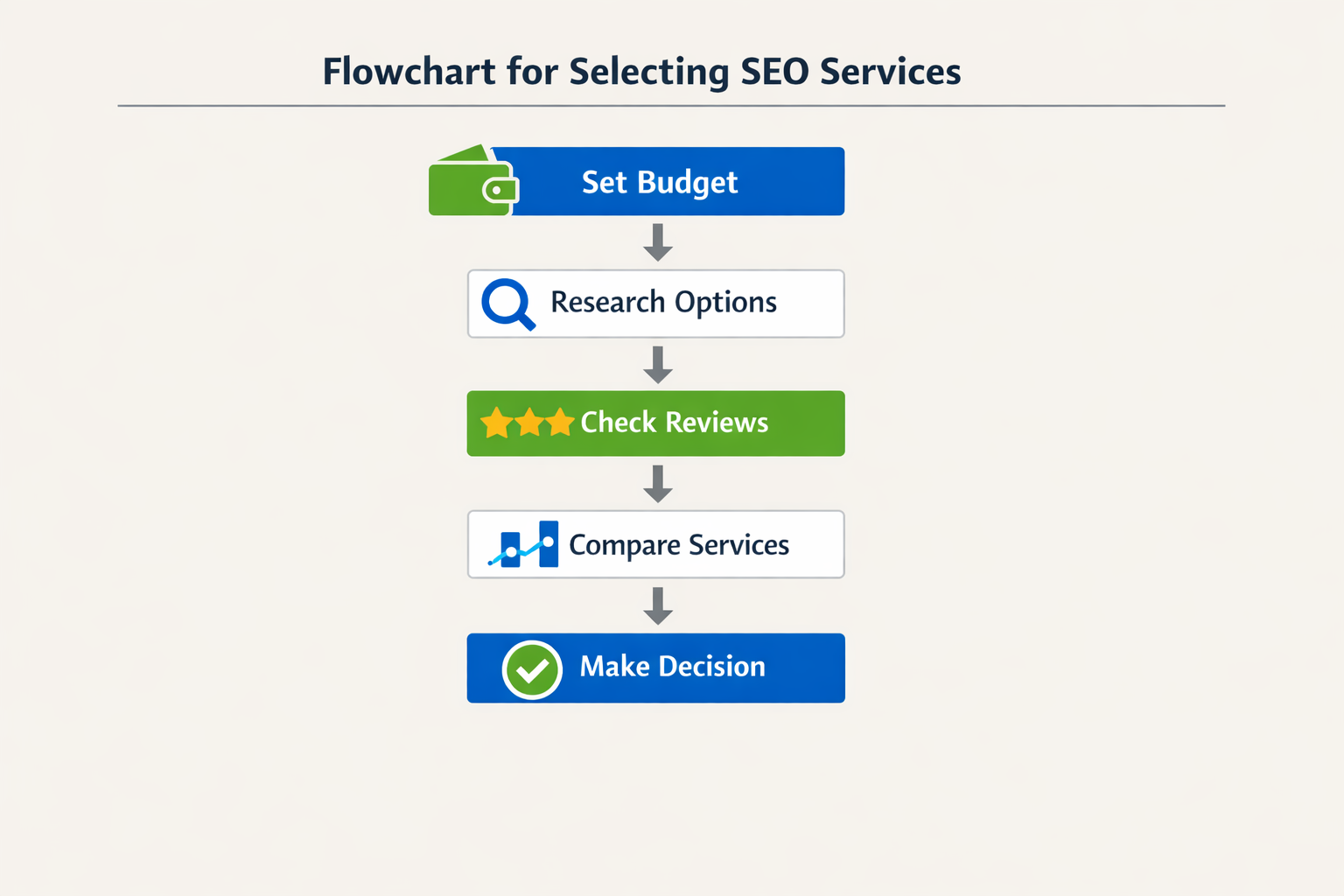
Finding affordable SEO services that deliver requires a structured approach. The steps below move from inventory to vendor selection, with the goal of matching your actual needs to what you're willing to pay.
Identify Your Specific SEO Needs
Step 1
Catalog what you need
Before you talk to anyone, write down the specific SEO work your business requires. Do you need technical fixes, content production, link building, local optimization, or a combination? List the gaps in your current setup — broken metadata, thin content, slow page speed, missing schema. This inventory prevents you from paying for services you don't need and ensures the vendor has expertise in the areas you do.
Most vendors sell packages. If you don't know what you need, you'll buy what they want to sell. Start with the problems you can see, then ask vendors to confirm or add to the list during discovery.
Prioritize Long-Term ROI Over Upfront Cost
Step 2
Define success metrics
Affordable SEO is not the cheapest bid — it's the service that delivers measurable return on investment over time. Before you evaluate proposals, decide which metrics matter: organic traffic growth, conversion rate, keyword rankings, or revenue attributed to search. A vendor charging more per month but driving conversions will cost less per acquisition than a cheap vendor driving only traffic.
Track traffic growth and conversion rates from the start. If a vendor can't or won't discuss measurement, they're not optimizing for results.
Seek Customized Solutions, Not Packages
Step 3
Request a tailored strategy
One-size-fits-all SEO packages are priced for efficiency, not effectiveness. A customized strategy reflects your business model, market, and competition. During vendor conversations, ask how they would approach your specific situation. If the answer sounds like a script, it probably is. Look for vendors who ask questions about your audience, your conversion funnel, and your current analytics before they propose a scope.
Customization costs more in discovery time, but it eliminates waste. You pay for work that moves your metrics, not filler tasks that pad a retainer.
Evaluate Expertise in Your Required Areas
Once you know what you need and what success looks like, filter vendors by capability. If your priority is local search, a vendor with strong content credentials but weak local SEO experience is the wrong fit at any price. Ask for case studies or examples in your vertical or tactic. Request references from clients with similar scopes.
For businesses moving into AI-driven search, consider whether the vendor understands schema markup for AI and structured data that language models actually parse. Traditional SEO vendors may not yet have this capability.
Compare Proposals on Scope, Not Just Price
Step 4
Normalize vendor bids
When you receive proposals, build a comparison table that lists each vendor's included services, deliverables, and exclusions. Normalize the bids by scope — if one vendor includes monthly reporting and another charges extra for it, add that cost to the second bid. Compare apples to apples, then decide whether the cheaper option is actually cheaper or just incomplete.
| Vendor | Monthly Fee | Included Services | Reporting | Contract Term |
|---|---|---|---|---|
| A | $2,000 | Technical, content, links | Monthly | 6 months |
| B | $1,500 | Technical, content | Quarterly (extra $200) | 12 months |
| C | $2,500 | Technical, content, links, local | Monthly | Month-to-month |
The lowest monthly fee is not always the lowest total cost. Factor in contract length, ramp-up time, and the cost of switching if the vendor underdelivers.
Start Early to Avoid Competitive Disadvantage
Delaying SEO while competitors invest compounds their advantage. The longer you wait, the larger the gap in domain authority, content volume, and backlink profile. Starting with a smaller, focused scope is better than waiting until you can afford a comprehensive program. Prioritize the highest-impact work first, then expand as results justify additional spend.
Tips and Tricks
Finding affordable SEO services that deliver is easier when you know what to check before you sign. The difference between a cheap mistake and a cost-effective partner is two or three verification steps.
Verify the Business Before You Pay
Check the registered premises. If the SEO provider lists a physical address, confirm it exists and matches their claimed location. A PO box or a virtual office is not disqualifying, but it changes the risk profile — you need stronger references and a tighter contract.
Ask to speak with current clients. A vendor comfortable with their work will connect you to references without hesitation. If they deflect or offer only testimonials they control, that is a red flag.
Audit Your Own Site First
Before you hire anyone, identify which pages lost traffic and for what searches. Look at drops in impressions or clicks over the past six months. Understanding what broke tells you what kind of help you need — and whether a vendor's pitch matches the actual problem.
Technical issues cost less to fix than content rewrites. Check URL structure, image compression, caching, and whether you have structured data in place. Many small sites leave easy performance gains on the table because no one looked. If you can point a vendor to a short list of technical fixes, you will pay less and ship faster.
Measure Schema and Structured Data Coverage
Most affordable SEO services skip structured data because it requires precision. If you are paying for optimization, confirm the vendor will implement schema markup for AI — it is one of the highest-leverage tasks a small budget can buy.
Ask How They Self-Assess Content
Google publishes a self-assessment framework for helpful content. A competent SEO provider will reference it when they audit your pages. Ask how they evaluate whether content is useful to your audience, not just optimized for a keyword. If they cannot articulate a quality standard beyond keyword density, you are buying the wrong service.
Conclusion
Finding affordable SEO services without sacrificing quality comes down to three moves: define what you measure, verify the work before you pay for promises, and structure the contract so the vendor eats their own risk. The cheapest bid is rarely the cheapest outcome. The vendor who ties their fee to traffic growth or conversion lift is the one who already knows their process works.
I built Xenco Labs to solve visibility problems at the infrastructure layer—schema that LLMs actually parse, content scoring that maps to answer-engine ranking, measurement frameworks that survive platform churn. Twenty-five years watching enterprise deals taught me that the operator who documents their success criteria before the kickoff call gets the ROI they planned for. The one who signs first and defines success later pays twice.
Start with a small scope. Pick one keyword cluster or one geographic market. Measure baseline traffic and conversions. Run the engagement for 90 days. If the vendor hits the benchmarks you set in writing, expand. If they miss, you've capped your exposure and you have data for the next conversation.
For ecommerce sites, the average ROI per dollar spent on SEO is $2.75. That number holds when the work is scoped correctly and the measurement is honest. Affordable SEO is not about finding the lowest price—it's about paying for long-term value and confirming that value with metrics you trust. The right provider will show you the data. The wrong one will show you a dashboard.
If you're evaluating vendors now, write down your success criteria before you take the first call. Answer engine optimization and structured-data work are where budget SEO separates from effective SEO—verify that your vendor knows the difference. The contract you negotiate today determines whether you're measuring ROI or explaining the spend six months from now.